
In 2008, Grant Wilson presented the following information along with a check for $90,000.00.
Who Is Charles Weingartner?
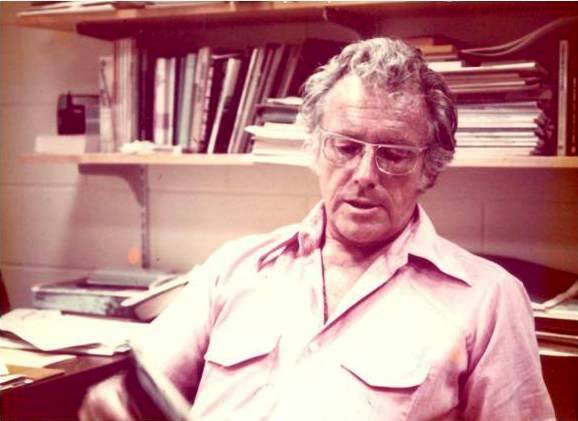
Who was Charles Weingartner? He was born on May 29, 1922 in Brooklyn, New York. Both parents were immigrants, his father from Germany and mother from Ireland. They were so poor that the family was evicted and moved from apartment to apartment close to twenty times by the time Charles graduated from high school.
Charles attended mostly catholic schools, a common occurrence for N.Y.C. children. He exhibited exceptional intelligence early on. Because of his poor study and work habits, and at the same time perfect test scores, nun teachers severely disciplined Charles for cheating. Because he cared so little about school or grades, Charles assured Grant on more than one occasion that he did not cheat, ever. “I never cared what I made on tests, since it was all nonsense anyway.” As you might expect, he grew to hate school, nuns, the Catholic Church, and religion in general. He associated learning with punishment and raw, ruler-beaten knuckles.
Charles’ formative years were during the Great Depression, and many of is views on life centered around material lack and limitation. The stories he could tell!
The happiest time of Charles’ life, according to his end-of-life recollections, was as a member of the Civilian Conservation Corp. in the Adirondack Mountains at age 18. He shared many tales about road, bridge, trails, and park projects he worked on.
Like most young men of his era, Charles went off to war in 1942. He served four years in North Africa and the invasion of Southern Italy. Charles and the Army Air Corp never got along. He became a Private again at least four times, being discharged as one in 1946.
The G. I. Bill was the greatest economic stimulus program the U. S. government ever created. Millions of discharged military men and women went on to technical schools and colleges, greatly enlarging the American middle class. Charles was one of these millions. He attended Syracuse University in up-state New York in the late 1940s, receiving a degree in English and education.
Married now with one daughter, the young family relocated to Alexandria, Virginia. Charles taught high school English there for several years. He fondly recalled those public school years, creating during this time many of his ideas about learning, teaching, and schooling.
Within a few years, the Weingartners moved to N.Y.C. while Charles earned a Masters and Doctorate from Columbia University. While teaching at City University in Manhattan and Queens College, Charles, Mary, and daughter Jan lived in Flushing, N. Y. on Long Island. He was as happy there, teaching and living, as at any other time in his life.
During the early 1960s, Charles met Neil Postman, a professor of education at New York University. They met at an education conference. I never learned the exact details, but Charles and Neil were sufficiently similar in philosophy that they began writing together.
The years passed. In time, Mary Weingartner needed to be near her aging parents in Deland, Florida. Charles learned of the recent establishment of the University of South Florida. He applied there and was hired in the very early 1970s. His employment there was a more-or-less constant regret, USF never meeting his expectations. And yet most of his writing and fame occurred here in Tampa. He traveled the country and Europe, speaking at conferences and to any gathering who would hear his message on learning and schooling.
Charles’ teaching style and personality always created conflicts wherever his was employed. As Mary told Grant on more than one occasion, they moved 19 times in 20 years. Her discontented husband moved from school to school, accusing them all of being “schooling factories,” incapable of even knowing what learning was.
Chas’ Accomplishments: Professor of Semantics & Education, and
World-Class Author
The four best sellers written by Neil Postman and Charles Weingartner were: Teaching As A Subversive Activity, The Soft Revolution, The School Book, Linguistics – A Revolution In Teaching.
 Teaching As a Subversive Activity was published in 1969. Weingartner and Postman became instant education celebrities. Together this writing team created four books and many articles.
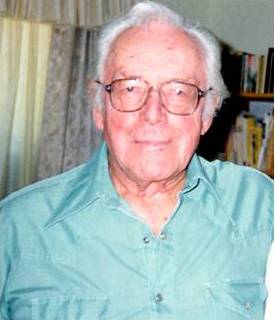
Charles lived the last twenty-five years of his life right here in Temple Terrace. He died on March 19, 2007. Charles was Grant’s dear friend for about 33 years, and Grant was the executor of his will, hence, this knowledge about him and the financial gift to UUCT.
Why Create a Scholarship Endowment Here at U.U.C.T.?
Charles agreed to let Grant create a scholarship program. He probably would not have preferred it being named after him, but did not disagree, which for Charles amounted to agreement. The one stipulation he placed on all this was that U.S.F. not play any part in the scholarship.
What did Dr. Weingartner do that made Grant want to memorialize him in this way? Weingartner and Postman, in the same manner as education reformer John Dewey, and so many others before him, sought to push schooling out of its traditional ruts of memorizing, prescriptive, politicized, religiously based enforcement of status-quo schooling. He sought to elevate common schooling into the realm of learning “how to think,” not just what to think, if in fact the latter may even be termed thinking.
We talked about donating a sum to N. Y. U., or Columbia University, or even City University of New York. In the end, Charles left the decision up to Grant as his executor.
During the last year and a half of Charles’ life, he joined the U.U.C.T. Grant brought him to visit our memorial garden several years ago, and he liked the idea of having a memorial stone in it. He read the “Domelight” regularly, asking questions on occasion. Our former minister Rev. Margery Bowens-Wheatly visited Charles on at least one occasion at a nursing house in Temple Terrace.
Near the end of his life, Charles agreed that we attempt to ask “our” church if it would be interested in creating a scholarship program in his name. Happily, the church Board of Trustees agreed.
Current Status of the Fund
The Policy: Charles Weingartner Scholarship Fund is listed under UUCT POL 2011-04-01. The Procedures for Charles Weingartner Scholarship Fund is listed under UUCT PRO 2011-04-01.
An Agreement was made on October 01, 2010 between The Unitarian Universalist Church of Tampa (the “Borrower”), at 11400 Morris Bridge Road, Tampa, Florida 33637, and The UUCT Endowment Fund (or the Weingartner scholarship fund), (the “Lender”), at 11400 Morris Bridge Road, Tampa, Florida 33637, where by the Borrower promises to pay the lender all of the principal borrowed plus interest. Lender has agreed to make advances to borrower under the terms of this agreement for the purpose of constructing the Multi-Purpose Building. $95,000.00 was the amount of the loan. This loan to the church will be paid off by May of 2015.
The Scholarship Fund Committee is currently making plans to begin giving scholarships for the Fall of 2015.